
Livestock temperature and humidity meter BMX-1808Y: zoned display, power-failure alarm
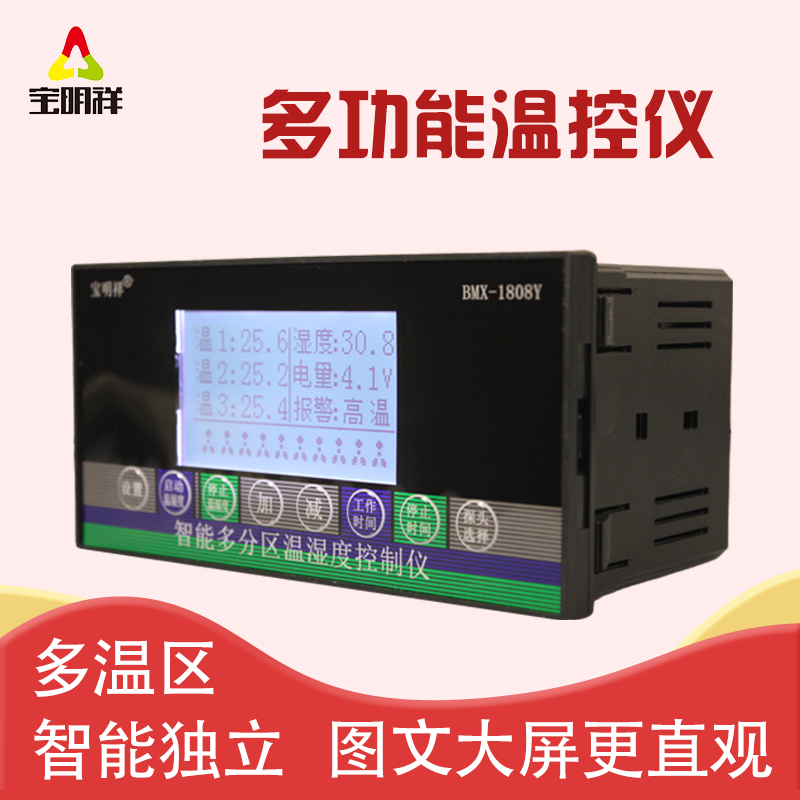
Baomingxiang BMX-1808Y multi-function meter: a graphic LCD listing temperature with humidity, battery voltage or alarm state zone by zone, an internal battery so display and alarm survive a mains failure, and eight keys for start/stop temperature and periods. Panel-cut-out mounting for new or existing cabinets.
| Model | BMX-1808Y |
|---|---|
| Display | Graphic LCD, temp + humidity |
| Zones | Multiple, independent |
| Alarms | Power loss, high/low, named on screen |
| Mounting | Panel cut-out |
| Taobao | https://item.taobao.com/item.htm?id=768147824050 |
A black instrument case, model BMX-1808Y, faceplate marked "intelligent multi-zone temperature and humidity controller". A graphic LCD fills the upper half, a membrane keypad the lower, eight keys in a row from set to probe select. This is not a cabinet; it is the meter that goes into one.
Each line on screen is one zone plus two readings
The display runs line by line: T1: 25.6, humidity 30.8, T2: 25.2, battery 4.1 V, T3: 25.4, alarm: high temp. Each line opens with the zone number, then the temperature, then whichever reading matters for that zone — humidity on one farm, backup battery on another, alarm state on a third.
What that layout buys is no paging: several zones and several parameters visible at once, read across rather than clicked through. Anyone standing at the cabinet gets the picture without pressing a key.
Humidity is not optional in poultry
25 °C in a dry house and 25 °C at high humidity are not the same experience for a bird. At 80% relative humidity the bird cannot shed heat, feed intake falls and respiratory trouble follows; too dry and dust fills the air, which also damages the airways. Having current humidity next to the temperature — 30.8% here — is how you tell whether a house is stuffy.
4.1 V is what keeps the alarm alive when mains power is not
The second line shows battery voltage, which means the meter carries its own battery: when mains power drops, the screen does not go dark and the alarm does not go mute. Power failure on a farm is not a small event — fans stop, pads run dry, and thirty summer minutes can push a house up. That reserve is what gives the alarm a chance to be raised at all.
The alarm field names the fault
The third line ends in "alarm: high temp". It does not simply light a red lamp for you to interpret — it writes which condition is active: high temperature, low temperature, power loss, sensor fault, each with its own words. Whoever is woken by a call at night reads the screen and knows which house to walk to and which fan to touch first.
Eight keys, set by subject
Left to right: set, start temperature, stop temperature, up, down, run/time, stop/time, probe select. To change a start temperature, press start temperature then up or down; to move between zones, press probe select; to change a period, use the run/time and stop/time pair. The logic is "pick the subject, then change the value" rather than menu diving, so a stockperson learns it once and adjusts without help.
Fitting and configuration
Black instrument case, panel cut-out mounting, wiring taken from the rear. It suits two situations: an existing control cabinet where only the meter is replaced and the enclosure stays, or a new cabinet with the meter built straight in. In houses that are humid or washed down, keep the meter inside the cabinet or a weatherproof box rather than bare on a wall.
Three things settle the order: how many zones, what each zone drives (fans, pads, heating), and whether humidity is needed. Those set the configuration and the wiring. Where a finished cabinet is wanted, our enclosure version of the same series is listed on the site. Phone: +86 199 3789 6911.
Popular products
 Livestock temperature control cabinets
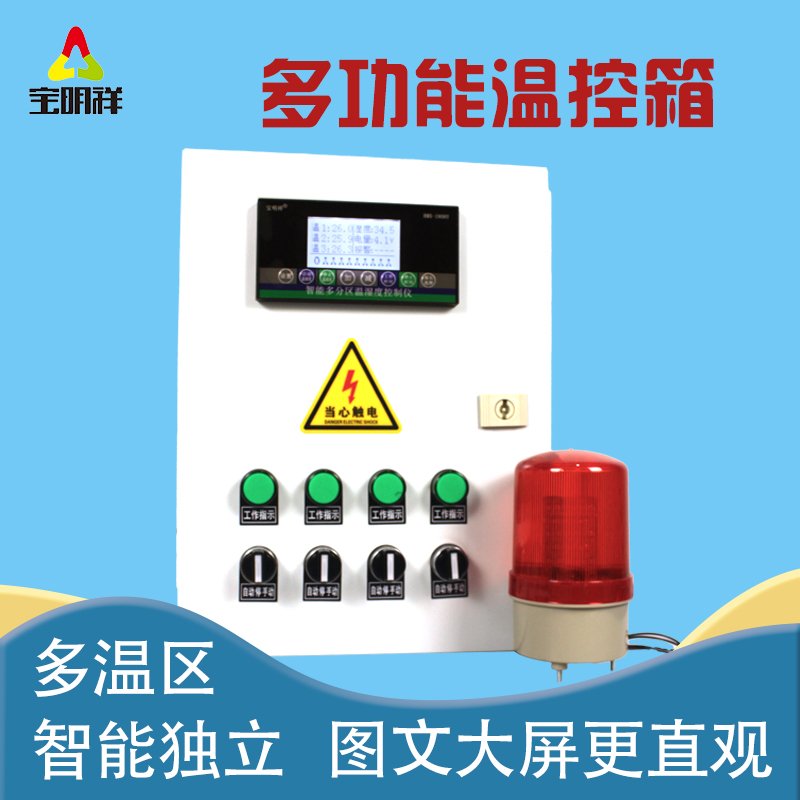
Multi-function temperature and humidity cabinet: multi-zone display, power-failure and high/low alarms
Baomingxiang multi-function cabinet: a graphic LCD listing temperature and humidity zone by zone, an internal battery so display and alarm survive a mains failure, four run lights with Auto/Off/Manual selectors, and a red sound-and-light beacon for over-temperature, under-temperature and power loss.
 养殖暖风机
Livestock temperature control cabinets
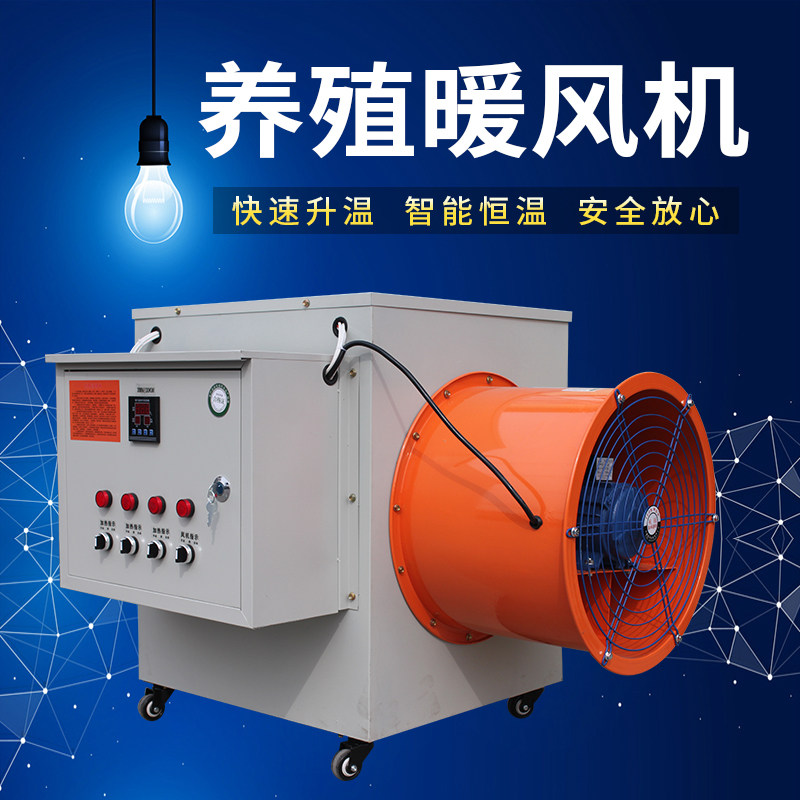
养殖暖风机 电加热恒温热风机:快速升温 · 智能恒温 · 畜牧养殖/烘干/车间取暖
 Livestock temperature control cabinets
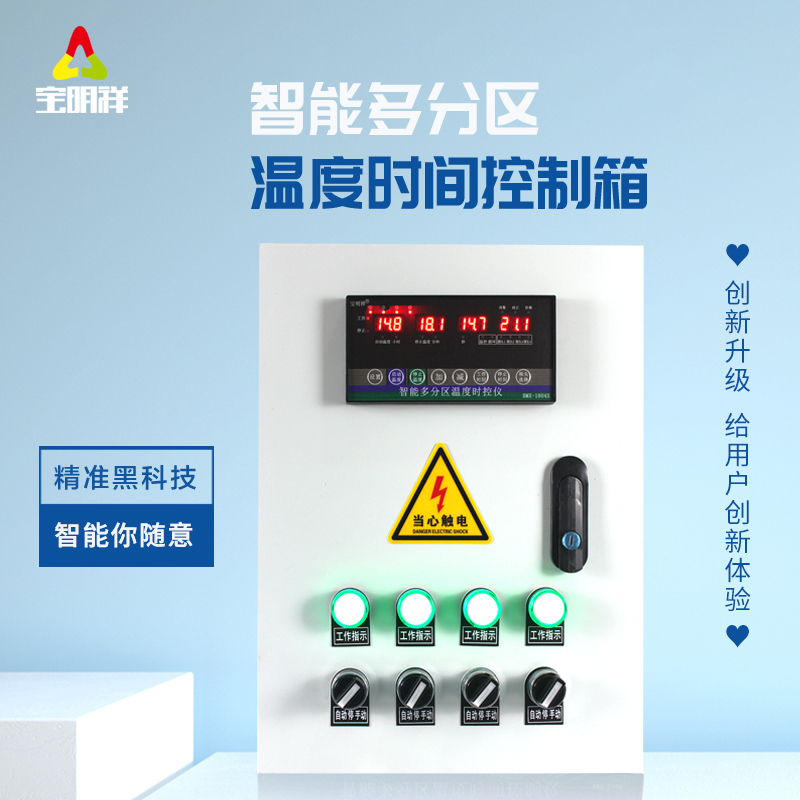
Digital multi-zone temperature and time controller cabinet for farm fans and cooling pads
Baomingxiang BMX-1804X multi-zone temperature and time cabinet: four seven-segment displays for four zones, temperature control alongside clock-based timing, four run lights and four Auto/Off/Manual selectors, built for farm fans and cooling pads.
Environmental controllers
Livestock temperature and humidity meter BMX-1808Y: zoned display, power-failure alarm
Baomingxiang BMX-1808Y multi-function meter: a graphic LCD listing temperature with humidity, battery voltage or alarm state zone by zone, an internal battery so display and alarm survive a mains failure, and eight keys for start/stop temperature and periods. Panel-cut-out mounting for new or existing cabinets.