
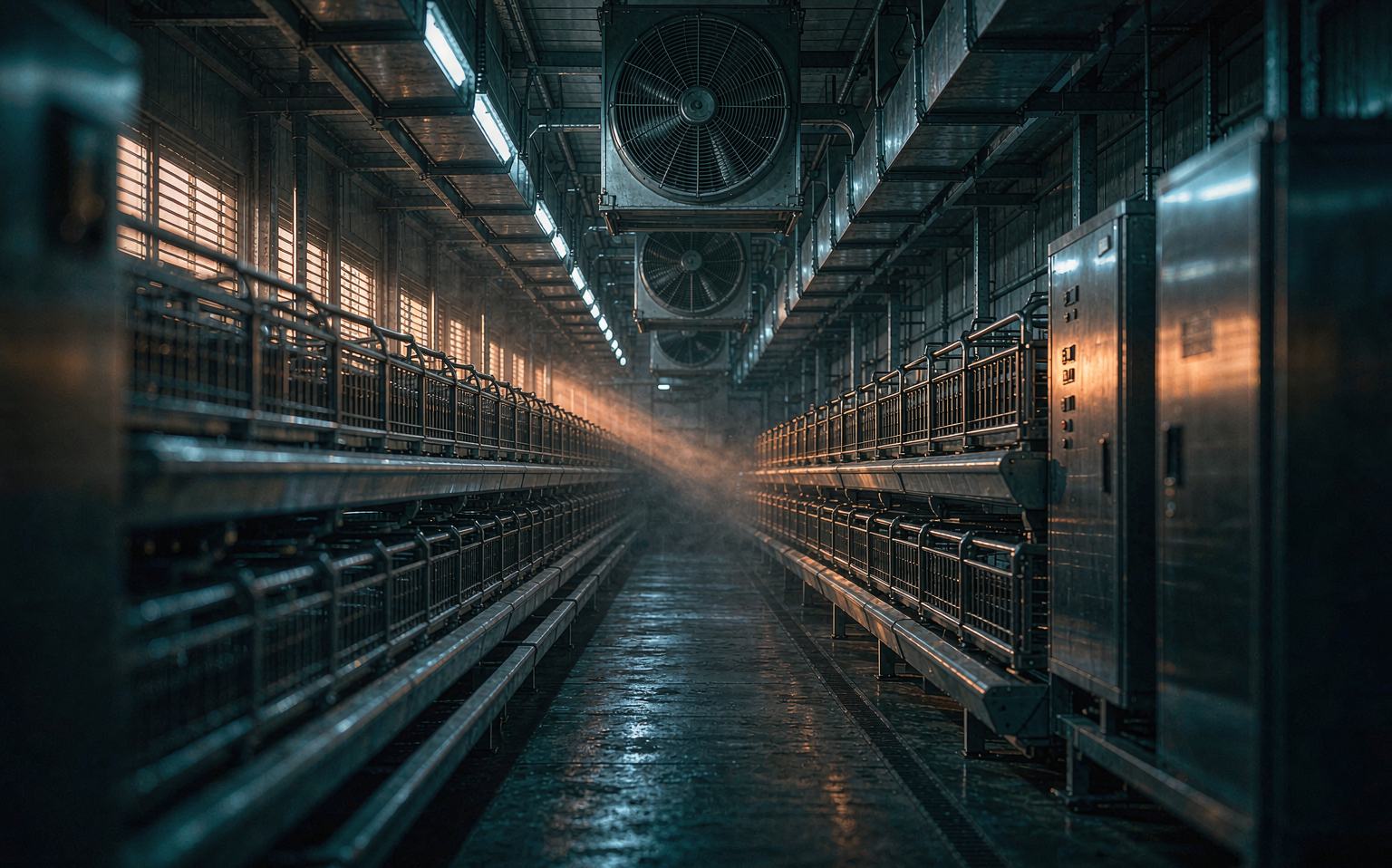
Turn a house's temperature into readable data.
Controllers, control cabinets, alarms and fan VFDs — we build the hardware and calibrate the parameters ourselves.
Product categories
Four device lines cover a complete control system — open a category for models and specs; if unsure, send us your house type and fan count.
-
01
Environment controllers
Local or remote, control from 0.1℃, 8–32 outputs configured to house type and fan count
→ -
02
Control cabinets
4, 6 and 8-output enclosures, pre-wired at the factory, power on site and run
→ -
03
Alarms
Triple monitoring for power failure, phase loss and over-temperature; alarm calls even when the network is down
→ -
04
Fan VFDs
Soft start without grid surge, savings and lower noise at low speed, A/B models by load
→
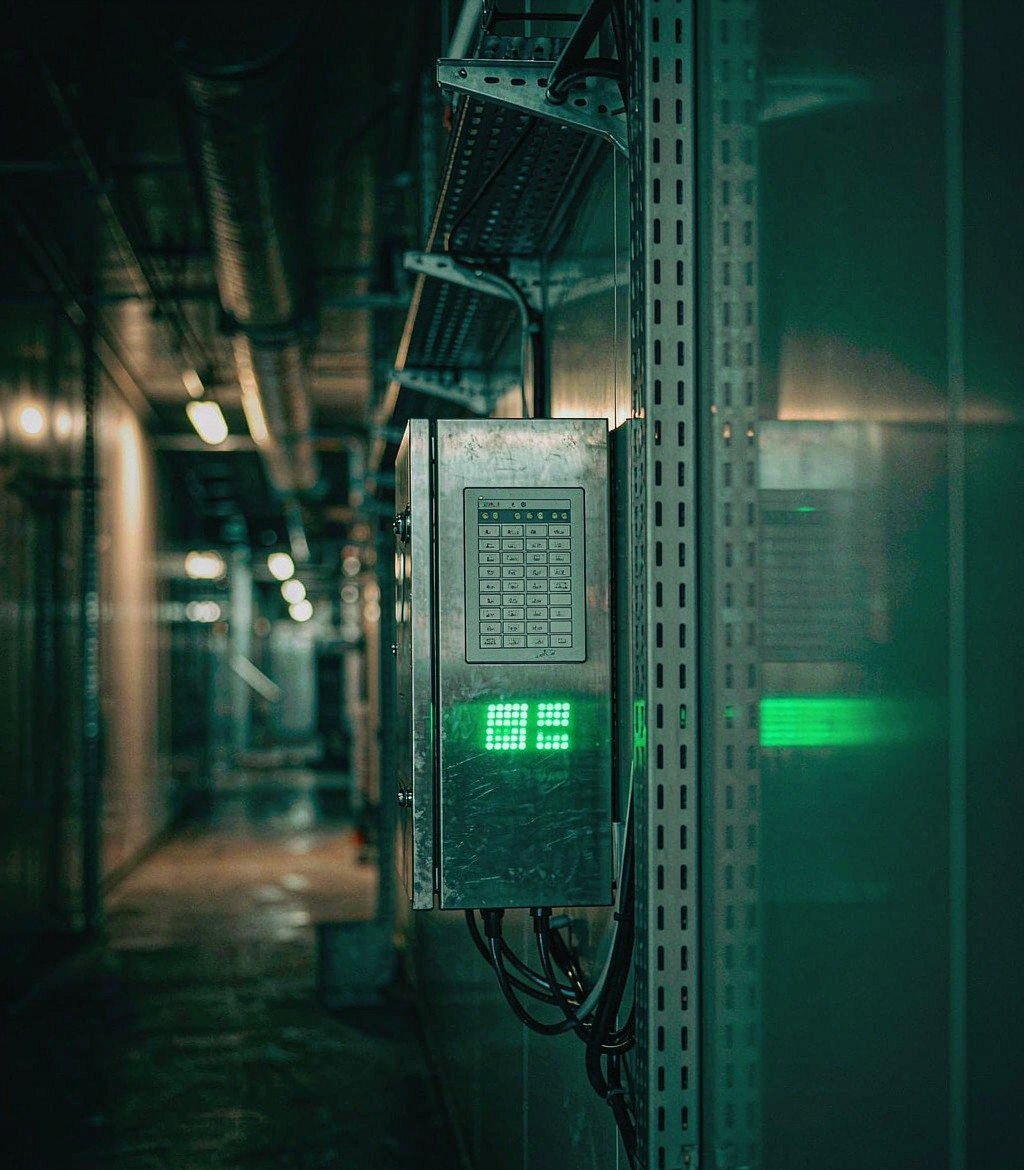
Sensing, ventilation, actuation, remote
Four things make up a control system — each one built to be verified.
Environmental sensing
Multi-point sampling of temperature, humidity, negative pressure and ammonia, averaged to avoid local probe error.
Ventilation and cooling
Fans and cooling pads staged together, shifting gears by the inside-outside temperature difference.
Precise actuation
Heating, cooling and ventilation set independently; one failed channel does not block the others.
Remote maintenance
See curves, change settings and receive alarm calls on your phone; parameters can be exported.
Customer stories
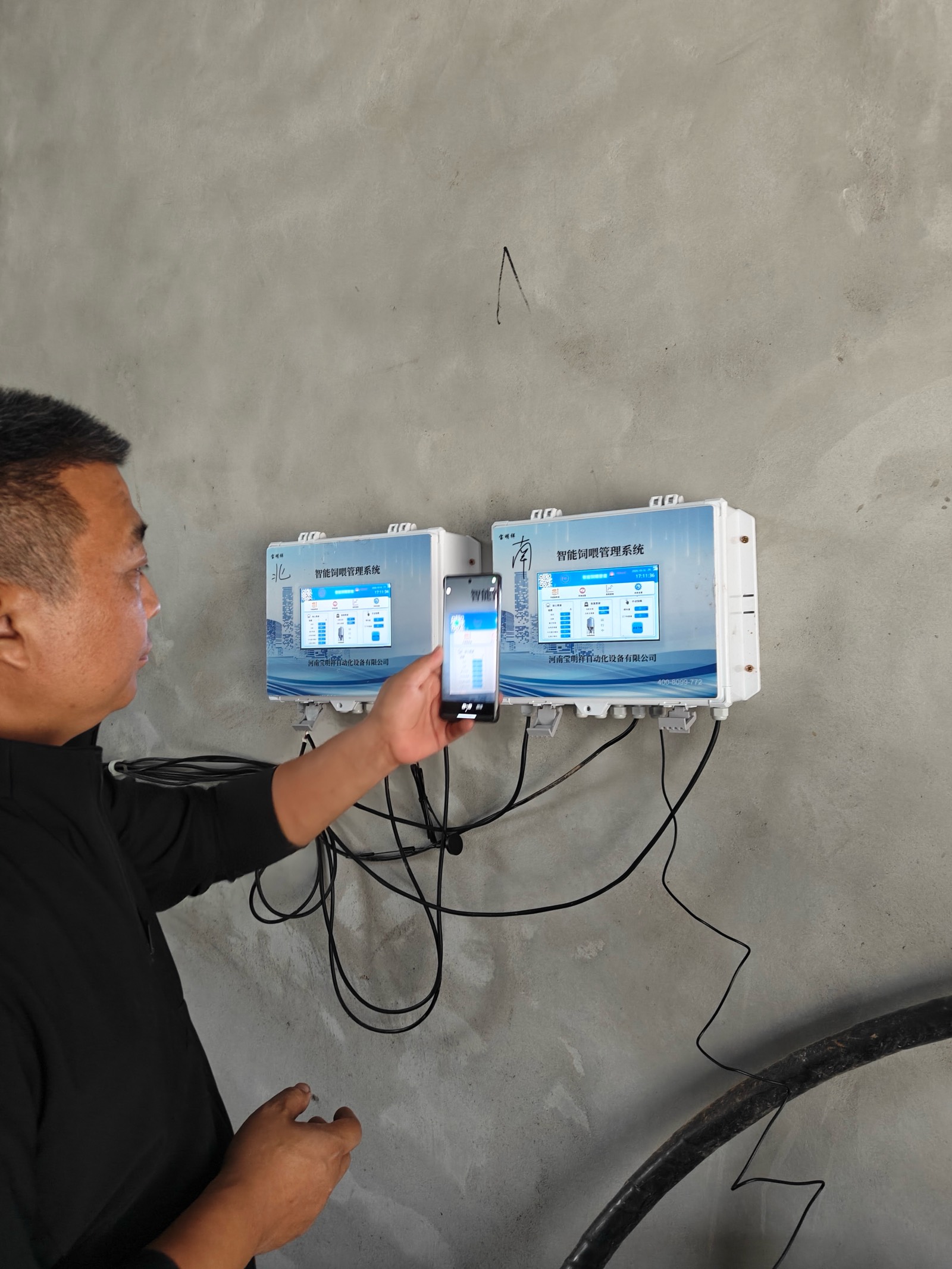
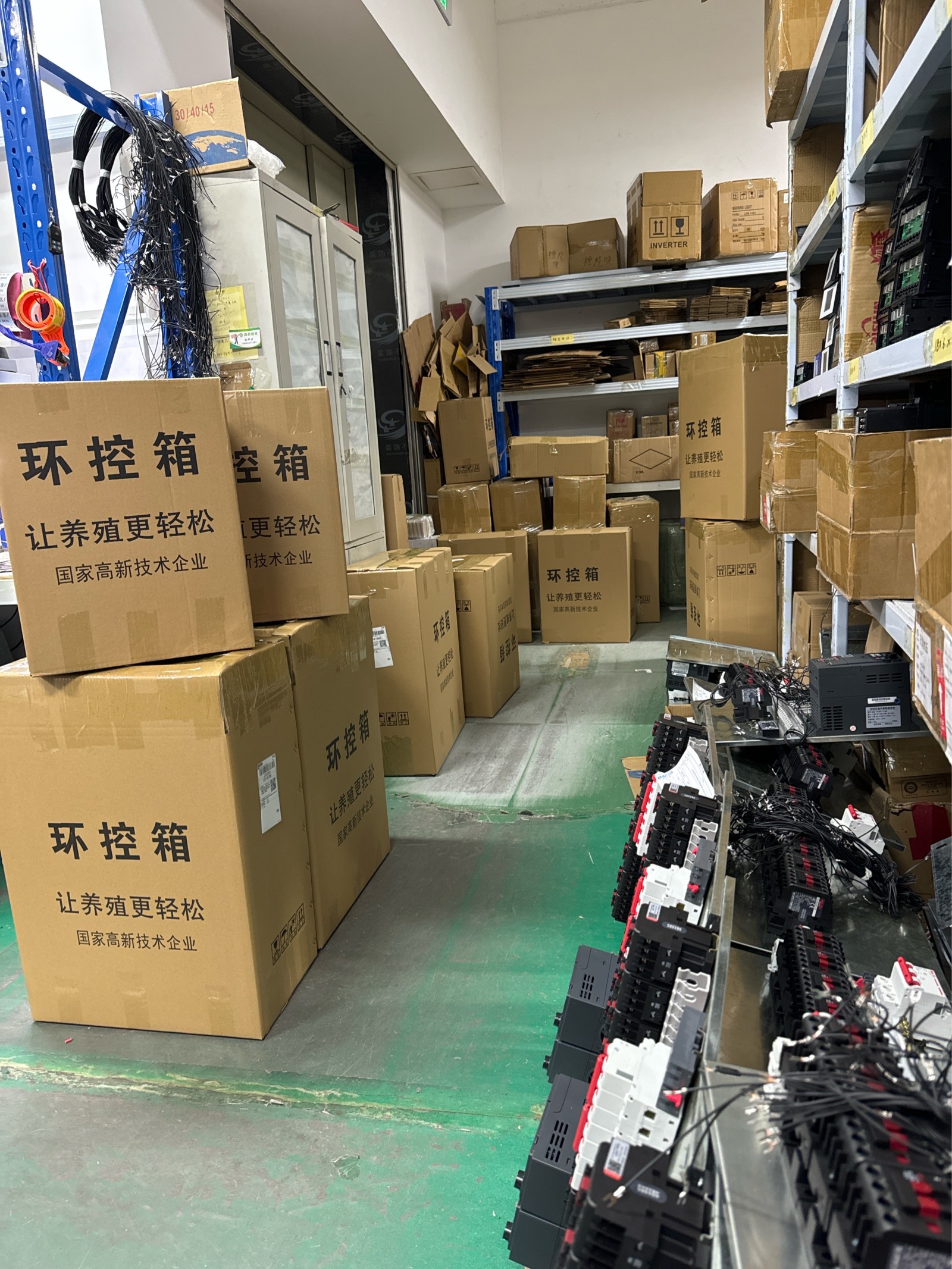
Different farms and regions every day — loading, delivery, installation: one record per truck.
Configured by scenario, not by model
The same hardware is configured differently for poultry and pig houses. Start with what you raise, how many, and how many houses.
Poultry house control
Brooding has wide temperature swings and frequent ventilation/heating alternation; independent zone control matters.
- Brooding / growing / laying zones
- Minimum ventilation calculated automatically
- Dual alarms for power failure and over-temperature
Pig house control
Negative-pressure ventilation dominates; ammonia and humidity are hidden costs — tune by data, not by feel.
- Negative pressure linked to inlet windows
- Ammonia / humidity monitoring
- Minimum ventilation in winter
Greenhouses
Heat exhaust by day, insulation by night; fans and pads follow temperature and humidity.
- Temperature / humidity linkage
- Staged pad start/stop
- Remote curves on your phone
Company news
Exhibitions, contracts, certifications — about a dozen milestones a year.
Better products and faster response for customers
We run our own AI department and use it in factory QC, configuration and the service knowledge base.
More reliable products
Before shipping, AI checks outputs, load, alarm thresholds and the configuration sheet item by item.
Faster proposals
Enter house type, house count and fan count; a configuration proposal comes out on the spot.
Service that holds up
Years of service records indexed into a searchable knowledge base, so engineers know the fix at a glance.